Feed on
Posts
Comments

UFO sightings

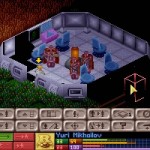
The red numbers on the side indicate he dies in three seconds

The old

Usually, I will not comment on the current news cycle, but this is one is too good to pass up: There will be a new UFO game. It will be turn-based. And it will be made by Firaxis (the Civilization guys). So how about that?

First reaction: Great! “Turn-based tactics” is the one genre I love unconditionally. It has something to do with the slow pace and the option to min/max a party of characters. Because what is better than gaining a Level-Up after a hard mission? Gaining six Level-Ups, of course! And UFO – Yes, it’s XCOM in the US. But I’ll stick with the European version thankyouverymuch. It will always be “UFO” to me. Many hours were spent manoeuvring the fleshy, vulnerable humans attached to my alien-killing weapons through dark neighbourhoods and farmland. Or cruise ships. Yes, I completed Terror from the Deep. It felt so difficult that I have the need to mention this achievement over a decade later.

Well, UFO had one of the best meta-games of any entries in that genre. It did not try to cram a story down my throat, but gave me the whole world to play with. And the story wrote itself from my decisions. A Terror Mission in Tokyo? Well, I probably should have patrolled that area more diligently. A large Spaceship is approaching my base, and the soldiers are still out on a mission? Quick, get some rookies and hope they don’t do more damage to the equipment than the intruders. Discover the alien base on Mars? Better have enough units and funding left to actually get there. Ah, it’s all coming back… So, loaded with enough nostalgia to kill an elephant, have a look at the first information from the new one.

You are allowed to streamline… a bit

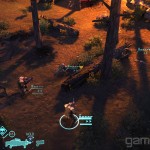
There are five units in this picture. Can you find all of them?

The new

The screenshots give me Hex grids and blurry terrain textures. I have seen that somewhere else. It looks like the missions are played in the Civilization engine. Thinking about it, there were some mods in Civ IV, which would transform the gameplay in just that: Manoeuvring space marine squads through dungeons. Just checked: It’s called Afterworld, and is a mod for Beyond the Sword. It appears that Firaxis has more experience with the genre than one would think at first. And from the looks of it, they plan to include most of the meta-game features from the original in their version. A wise choice.

There is an idea in the new UFO that I like very much: Vertical base building. In the original, the base layout had one single use: Creating the level if an alien ship attacks you directly. Aliens could only enter through the main elevator and the hangars, which made mostly for samey, H-shaped bases in my case. The screenshots look like There is a single point of entry from above, which could free the rest of the space for actually interesting construction after the entry is secured. So, there is a chance to give adjacent rooms more context than simply raising a global base statistic.
Ok, I notice I will be mostly speculating and wishlisting from here on. I’ll save that after more information is released.

Trolls united

Most of them are probably aliens, anyway

The other evolutionary branch

Just one thing: Please tweak your Art Direction? It’s all looking so shooter bland. Yes, you probably have to follow a newly created brand bible, but really. On some of the worse screenshots, the game looks like an indistinguishable mass of brown overlayed with a screaming UI.
How about adding some more colour? The original worked well with its comic look, heavily inspired by Image Comics. Hey, you could even take it further, and go for the Asian audience (see picture). Please?

Another thought from a developer point of view: Is Firaxis trolling 2K Marin? That is the studio responsible for the UFO Shooter. They are peacefully aligned on the official brand page. But after the 2K boss dismissed strategy games last year as “not contemporary”, I would have completely understood if Firaxis had added a single line to their strategy UFO press reveal: “@cHartmann: ZING!”

Back in 2009, I wrote a Developer Diary for ANNO 1404. Yes, I am carrying this Games – Reality theme around for some time now. To my knowledge, it never got a translation into English. Here is the original entry. And now, here is my personal translation:

They may be inconspicuous, but are still there: Similarities between brothers.
In the case of Simon and Sebastian Bombera, it is a common fascination with the past. The younger brother studies history, while the elder works on a videogame with historical setting. After Simon aced his state examination, they had some celebratory beers. And some time later, the discussion swerved towards the background of ANNO 1404.

Simon: So, why actually 1404? That may have been an exciting year, but I cannot think of any decisive event to remember it by… instead, for example, 1492 or 1798.

Sebastian: Well, it was not supposed to. For ANNO, we are always looking at a large timeframe instead of a single event. It is not about letting players discover America or survive the French Revolution, but to have them write their own history. ANNO is just the setting and the rules, but it is up to the players to choose their path – whether as a diplomat, guild master or master builder.
And by the way, the rough time frame gives us far more freedom when choosing which Goods, Buildings or Technologies become part of the game.

Simon: Yeah, looking at some artworks, you are really exploiting this freedom to its fullest. Just look at the architecture: I can see Gothic, Romanesque, Renaissance… simply anything that seemed to fit somehow.

Sebastian: Well spotted. And you already called the reason for this mishmash: It fits.
There are a lot of buildings in this game. And they all have to follow some common rules.
Primarily, they need to be distinct and recognizable, even at a large distance.
When players are looking at their island from above and search for their Charburner’s Hut, it is easier to spot the house with the large charcoal stack instead of searching every cabin for the black guy.
Secondly, the buildings should fit their particular civilization level. These levels have to be visually distinct while looking more impressive with every step.

Occident Residences
Every civilization level got its own look

Simon: Alright… so that’s why your Aristocrats don’t live in castles, but in Biedermeier-era town halls and are busy all day lighting new candlesticks.

Sebastian: Wisecracker!

Simon: No, really. How the hell are you choosing these goods and production chains, anyway? I can believe that Peasants take their only nourishment from fish. But the very next level, the Citizens, demand for Spices, which seems a little out of place. Pepper, for example, was worth its weight in gold these times and was not available to the common folk.

Sebastian: To get all the wares for ANNO 1404, we started out with extensive research, and created several long lists afterwards. These contained everything from Abacus to Zwieback, complete with pictures and descriptions of their fabrication. Based on these lists, we did the actual design while considering the game mechanics: How complicated is a production chain? What buildings are needed, and what types of intermediate goods are produced?

Simon: What do you mean with „intermediate goods“?

Sebastian: That is what we call all goods that are processed further. For example: Hemp is intermediate goods, which is fabricated into linen cloth, ropes and candlewick. And if a production chain becomes very complex and needs many of these intermediate goods, it belongs into the late game. That way, new players will not become overwhelmed and the experienced ones get something to do later on. And now back to your Spices for Citizens… well, it is a simple chain. Not enough complexity for the more appropriate Aristocrats level. And by the way, it is a good reason to send players south, looking for the right growing area. So we can introduce the Orient at that stage.

Meeting of Cultures
“Learning from other cultures” is the main theme of ANNO 1404

Simon: Ah, the Orient. That was a good idea. Especially considering that there have been relations between Occident and Orient long before the year 1404. The Byzantine Empire had been already structurally weakened through its conquest by crusaders in 1204. Consequently, it could do nothing to slow the growth of the Ottoman Empire during the 14th century. The Byzantine Capitol, Constantinople was finally captured by the Turks in 1453.
So, your game plays during a historical phase in which the emerging fabric of European states had to stand up to the expansion of the Ottoman Empire.
Additionally, at around 1404, the Reconquista was still ongoing on the Iberian Peninsula. It would not end before 1492, with the surrender of the Moorish city of Granada.

Sebastian: That is quite a memory you got there! But this is also one of the main points, where ANNO 1404 differs from history. We do not present the Orient as an expansive opponent, but as a helpful ally. There have always been long stretches of time, in which all cultures and religions lived rather peaceful alongside each other and learned from neighbours. The Moors in the West and the Crusader Kingdoms in the East both arranged themselves with their surroundings and created their own mixed cultures. These times saw an immense exchange of goods and knowledge between cultures and shaped many areas of life to the present day: Medicine, Chemistry, Mathematics, eating habits… to name a few.
Regrettably, these peaceful periods get forgotten too often. Chances are, if you are talking about relations between Orient and Occident, the first word everyone recalls is “Crusade”. So, yes, that pop cultural memory is the reason why the campaign in ANNO 1404 deals with a crusade and its associated power games.

Simon: That is historically quite incorrect. The seventh and last crusade is already 130 years in the past in 1404.

Sebastian: Yes, but it feels right for the game. We rate fun over realism. And ANNO 1404 does not claim to keep to the books. We are playing in an idealized, pop-cultured version of history. With terms and pictures that everyone thinks of when they hear “Middle Ages”. We are walking the line between the derogatory damnation of that epoch as “Dark” and its kitsch romanticisation as “ye good olde tymes”.
And we present a lot of things that are historically accurate and distinguish ANNO 1404 from its predecessors: Cogs instead of Galleons, Knight’s Castles instead of Pleasure Palaces, or Corsairs instead of Pirates. History is present in all areas of the game: The medieval estates of the realm, beggars, princesses and tournaments, outlaws, torturers and plague carts, monasteries, irrigation systems and caravans…

Simon: …alright, alright, I see you put a lot of thought into the game’s setting, regardless of all inconsistencies. Now, please, let me irrigate my dry throat and intermediately produce two new glasses of beer.

Although fans argue about build orders

Not an RTS

Many strategy games are resource battles that can be summarized as ascending or descending graphs. Fighting against the numbers is not fun stressful.

Picture a typical session of your favourite video strategy game. It is most likely one of two things: either a constant click-fest or a long, drawn out affair until one final battle after which the defeated player quits the game. I do not like the first version, since most of the time I play to relax. And the second one is problematic on several levels. As you can see from last week’s entry, I like to keep players in the game. The long build-up does that, but for a long an uneventful time, after which you lose everything without a chance to come back.

It’s all in the numbers. The deciding numbers in the first scenario are Actions Per Minute, while the second scenario is decided by Resources Per Minute. Both are systemic to either Real-time- or Turn-Based Strategy Games. For the record, I put the ANNO games into the second category because of their long playtime and many delayed effects. So, if you ever wondered why the series is such a bad RTS: That’s why. It is not designed to be one.

Ascending strategy

Looks like a close fight

Epic battle

Back to the numbers: Ascending graphs are used for games with a build-up phase. This phase transforms the available resources of the map into combat resources that can be used against opponents. Usually, all players begin with the exact same resource setup and means to transform them. Tactics is applied when it comes to timing and positioning.  You can defeat a more advanced opponent by refusing to go heads on and harass him down to your resource level. But you have to invest lots of actions and good timing to get that down right.

What it boils down for many strategy games, or at least lazy gamers, is: Stacks of Doom. Be it the one undefeatable uber-hero in Heroes of Might & Magic, the single killer-stack in Civilization, or all your warships in ANNO. It all ends in one single confrontation that decides the war. Far more relaxing than constant tactics, but not guaranteed to satisfy.

Descending strategy

An army had to die to bring you this screenshot

Gratuitous battle

On the other end are descending graphs for games that skip the build-up. These are usually more focused on tactics and army composition. Most use point values for units to make sure all players start with the same resource strength. Victory goes to the player with more units standing at the end. This puts the whole gameplay around one large negative loop: Whatever you do, you will lose resources, and they are not coming back.

These make for some interesting matches. Both players can see what they are up against and plan accordingly. Yes, there is still a breaking point where one side decidedly got the upper hand. But at least to me, surrender in these games comes more easily and with more satisfaction for the winner. Maybe that is because of the absolute vision and battle state knowledge (Note to self: check hypothesis with next concept). There are a lot of tabletop examples like Warhammer, Battletech or most famously, Chess. But unfortunately, few videogame versions.

My point being…

The pieces get thrown around only after the game is finished

Some Euro Game

Ok, you got me. Nothing new here. Just wanted to express my need to boil down games to systemic graphs and numbers. Because these are necessary to answer some of the questions I ask myself when analysing different games: What type of resource structure does it have? What are the deciding factors for victory? Why do players quit minutes after starting a game session if they did not have a perfect start? What can I do to keep players in the game and offer both, the winning and the losing player a fun experience?

Here are some common answers to the last one:

  • Rubberbanding: Give benefits to the slower and handicap the faster players. Can be either obvious or quietly running in the background.
  • Different victory conditions: It does not matter if one player ascends faster than the other if both work on different graphs.
  • Wait with the scoring: Usual solution in Euro games. Players learn who won only after the final tally of points.

A game should not rely on one dominant stack-of-doom strategy. That includes making other strategies both viable to win and easier to employ, without giving players carpal tunnel syndrome. And finally, there should be more PC games with descending strategies. Go for it!

« Newer Posts - Older Posts »